Lenovo IdeaPad 1: Best Overall
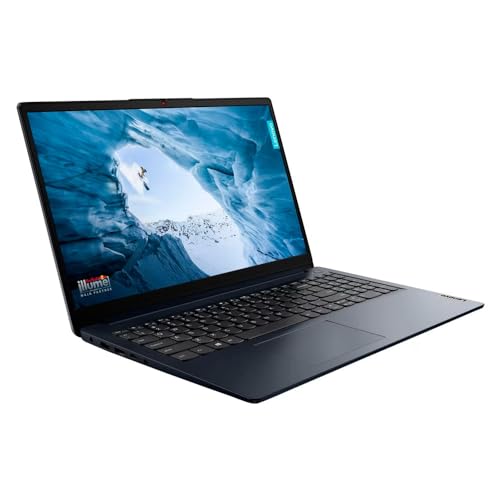
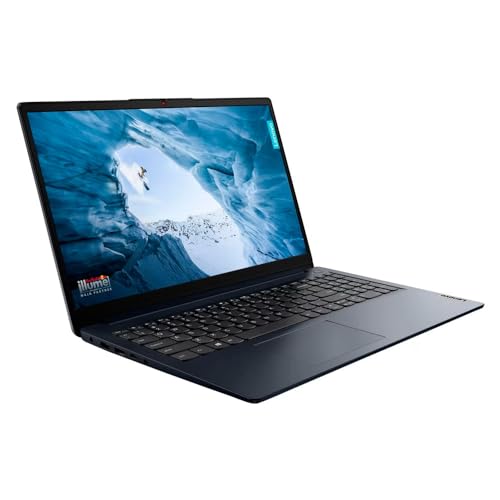
The overall machine is the Lenovo IdeaPad 1 15IJL7, model 82LX0050US. The title lists a 15.6-inch full HD screen, an Intel Pentium Silver N6000, 4GB of RAM, 128GB of flash memory, and Windows 11 Home. The overall label is a Windows notebook with integrated Intel UHD graphics, sitting between a Chromebook and a gaming laptop. It is not a gaming system and it is not a thin-and-light flagship.
A spec row on the capture said 10th Gen. The title and the CPU model row say Pentium Silver N6000, so that generation row is not the processor in this article. Another row said the keyboard was backlit. The About bullets do not say that, so this is not a backlit-keyboard claim. A drive row called the storage solid-state while the title says 128GB flash memory. Treat the storage as the flash memory the title names, not as a drive type the conflicting row tried to settle.
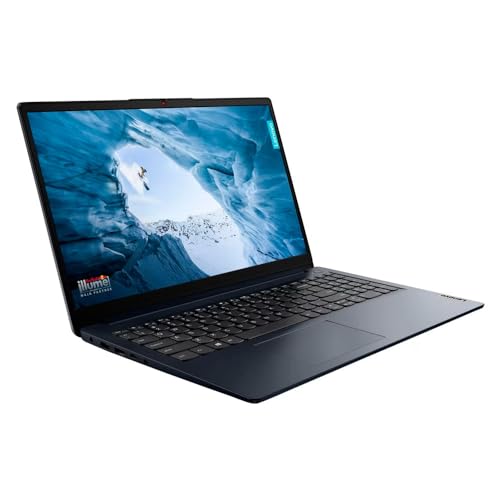
The capture’s offers ship from and are sold by Snow Bell and by Oydisen Computer. Those are third-party sellers, not a sentence that says Amazon.com is the seller. Read the seller on the listing you open. A third-party seller can be a normal retail offer, and it is still a different counterparty than Amazon.com. The photo shows a blue Lenovo, open, with a number pad and a Lenovo logo on the bezel.
Four gigabytes is enough for a browser and a document, and it is tight if you keep many tabs, a video call, and a store app open together. You cannot assume this board takes a later memory upgrade. If the listing does not promise an empty slot, plan on 4GB for the life of the machine. Windows 11 Home is the operating system on the title. A Chrome-only school account can still use the browser, and a program that is Windows-only is the reason to pick this over the Chromebook.
The overall student laptop in this verified set is the IdeaPad 1, because a large share of US coursework still assumes Windows, and because the TUF is more machine than a notes-and-papers week needs. Model 82LX0050US brings Windows 11 Home, a Pentium Silver N6000, integrated UHD graphics, 4GB, and 128GB of flash memory. A student who keeps dozens of research tabs open will feel 4GB. That is a reason to close tabs, or a reason to admit this is the wrong overall laptop if the work cannot be light. It is not a reason to invent an 8GB version of this model code.
Third-party sellers Snow Bell and Oydisen Computer matter to a student who may be away from home when a return is due. Know the return clock before move-in weekend. A seller who is not Amazon.com still has to match 82LX0050US. Do not accept a substitute with a brighter “gaming” title. Do not believe a 10th Gen badge if it reappears. The chip is the N6000. Do not expect a backlit keyboard. Late-night typing on this IdeaPad is the screen’s light, unless you add a lamp.
The IdeaPad is the right student overall when Windows is required and the work is documents, a browser, and light apps. It is the wrong one when the major is a 3D or game program that wants the RTX 4050. In that case the TUF is the premium, and the student should admit the weight.
Acer Chromebook 315: Best Budget
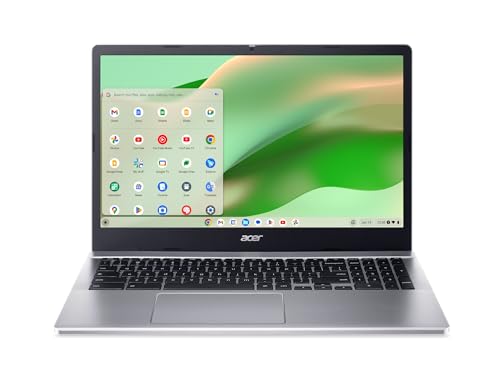
The budget machine is the Acer Chromebook 315, model CB315-5H-C7KX, in Sparkly Silver. The page lists a 15.6-inch full HD IPS display, an Intel Processor N100, 4GB of LPDDR5, 128GB of eMMC, Wi-Fi 6E, and Chrome OS. The budget label is that simpler platform: Chrome OS, no discrete graphics chip, and no Windows install. It is not a Windows notebook that someone forgot to name, and it is not the 17-inch gaming laptop later in this set.
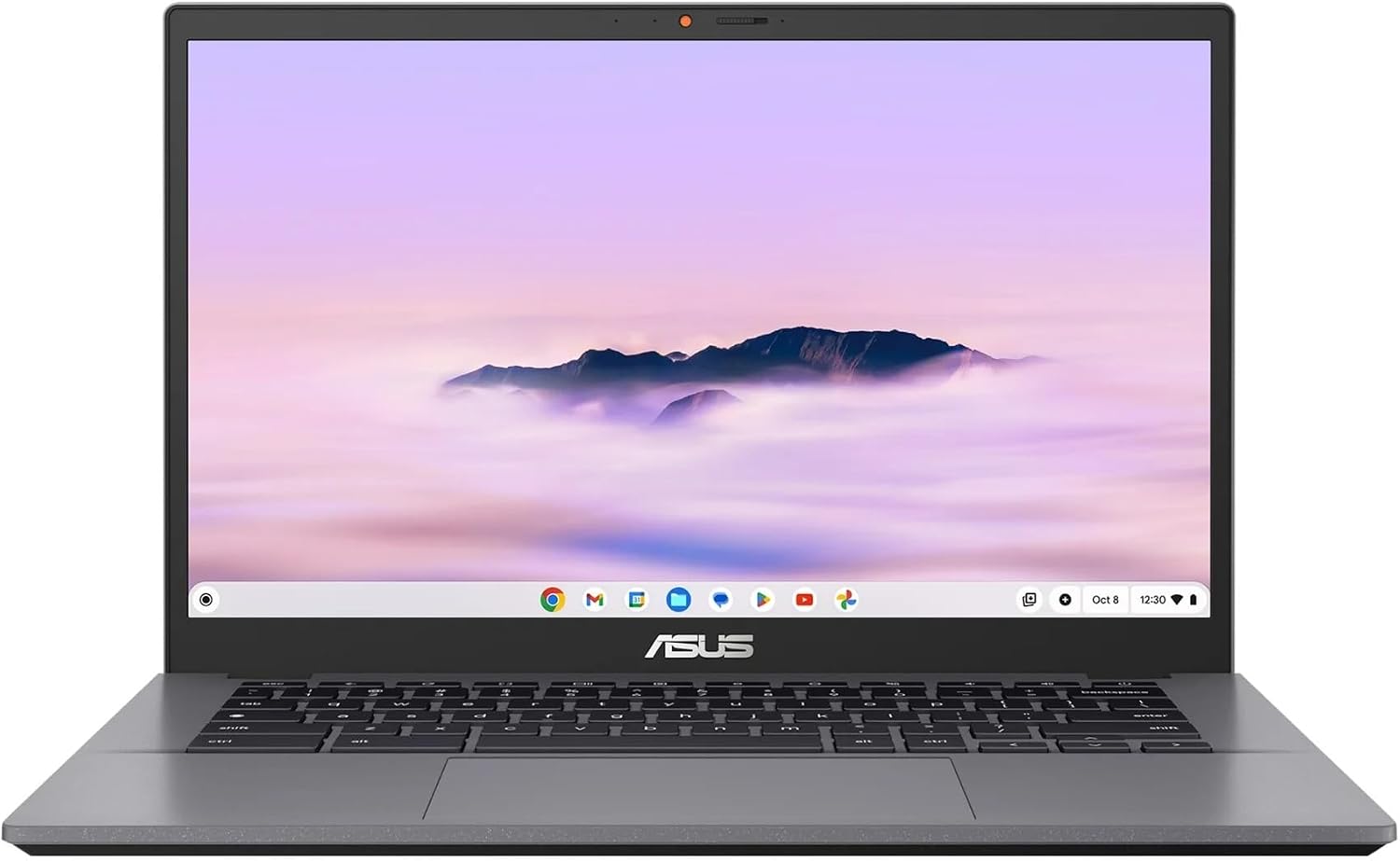
Four gigabytes of memory and 128GB of eMMC are the limits you live with. Chrome OS keeps many files online, which helps, and it still fills if you download a semester of video or a stack of installers. The N100 is an everyday processor for a browser, documents, and calls. It is the wrong chip if you expected to edit long video on the device itself. The photo shows a silver Acer open to a Chrome OS desktop, with a number pad. Read CB315-5H-C7KX on the listing before you treat a different Chromebook 315 as this one. Acer uses that family name on more than one configuration.
Buy this Chromebook when the work is a browser and the storage number is acceptable. Skip it when a class or a job requires a Windows-only desktop program. A Chromebook will not grow a Windows partition because a seasonal page grouped it with Windows laptops.
For a student, the Chromebook is often the honest budget computer. Class pages, Drive, Docs, and email are the day. CB315-5H-C7KX runs Chrome OS on an N100 with 4GB and 128GB eMMC. That is enough when the school lives in a browser and the student does not install heavy local tools. It is not enough when a department requires a Windows statistics package, a campus VPN client with no Chrome version, or a lab license that is an exe.
The 15.6-inch body fits a dorm desk better than the 17-inch TUF and worse than a tiny ultraportable this set does not include. A number pad is useful for lab data and useless if the goal was the lightest possible bag. Battery life is not a number this capture settled, so plan on a charger in the bag rather than a promise of a full day. Campus outlets exist until they do not. Carry the charger.
Students who share a family computer should know Chrome OS profiles are separate, which keeps a sibling’s files apart. They should also know 128GB eMMC will not hold several offline course packs plus a pile of local video. Use cloud folders. Buy the Chromebook when the syllabus is browser-based. Do not buy it to discover during midterms that the required tool is Windows-only.
ASUS TUF Gaming A17: Best Premium
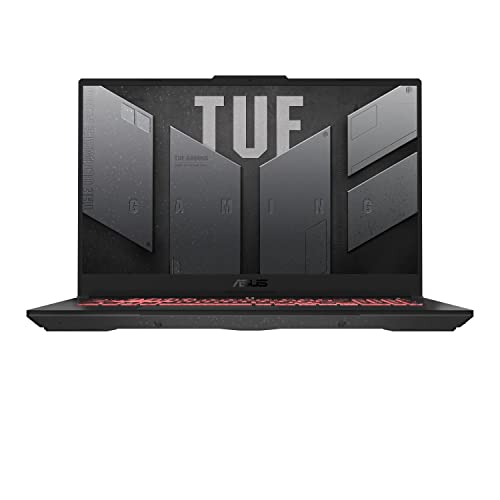
The premium machine is the ASUS TUF Gaming A17 from 2023, model FA707NU-DS74, in Mecha Gray. The title states a 17.3-inch full HD 144Hz display, a GeForce RTX 4050, an AMD Ryzen 7 7735HS, 16GB of DDR5, a 1TB PCIe 4.0 SSD, Wi-Fi 6, and Windows 11. The premium label is the dedicated graphics and the higher refresh rate. The photo shows a black ASUS gaming laptop with TUF on the lid and a backlit keyboard.
Sixteen gigabytes and a terabyte are a different class from the 4GB and 128GB machines above. The RTX 4050 is there for games and for programs that use a GeForce chip. It does not make a 17-inch laptop easy to carry, and it does not turn every homework file into a reason to own it. The 144Hz panel is a display spec from the title. A 60Hz office screen is a different product. Read FA707NU-DS74 so you do not accept another TUF A17 with a different graphics chip or a smaller drive.
This is the right premium when you already know you want a large gaming laptop and the model code matches. It is the wrong premium when you wanted a light notebook for notes. Weight, the power brick, and a 17-inch footprint are part of the purchase even though a seasonal photo crops them out.
The TUF is the premium student laptop only for a student who will use the GPU. Model FA707NU-DS74 has the RTX 4050, a 17.3-inch 144Hz screen, a Ryzen 7 7735HS, 16GB of DDR5, and a 1TB SSD. A computer-science or design student who renders, or a student who games as the actual use, can justify it. A student who writes papers cannot. The 17-inch chassis is a backpack problem. The brick adds more. Dorm desks are small. A 144Hz panel does not make a PDF clearer than the IdeaPad’s full HD screen.
Sixteen gigabytes is the student-relevant spec if the work is an IDE, a design tool, and a browser at once. That is the gap the 4GB machines do not cross. The terabyte holds course files and game files together, which is also how it fills. Windows 11 is shared with the IdeaPad. The graphics chip is not. Confirm the RTX 4050 after setup so a different TUF did not arrive.
Buy the A17 as a student premium when the syllabus or the hobby uses the GPU and the student can carry 17 inches. Skip it as a status object. A heavy unused gaming laptop is a bad roommate.
Student Laptop Black Friday Deals 2026 buying advice
Student Laptop Black Friday Deals 2026 comes down to the syllabus. The Acer Chromebook 315 is the budget pick when classes live in a browser. The Lenovo IdeaPad 1 82LX0050US is the overall pick when Windows is required and 4GB will do. The ASUS TUF Gaming A17 FA707NU-DS74 is the premium pick when a GeForce RTX 4050 is part of the work, not part of a wish. A first-year writing student does not need the TUF. A student in a GPU course does not need to pretend the Chromebook will compile that workload.
Carry weight, outlets, and sellers are the campus details. The Chromebook and the IdeaPad are 15.6-inch notebooks. The TUF is 17.3 inches plus a larger brick. None of these captures published a battery runtime you should quote as a promise, so pack the charger. The IdeaPad on this capture is sold by Snow Bell and Oydisen Computer. A student who will not be home to receive a return shipment should read that clock before ordering. Memory is 4GB on the first two and 16GB on the TUF. Storage is 128GB eMMC, 128GB flash, and 1TB respectively. Those are the machines.
Ignore a 10th Gen label on the IdeaPad. Ignore a backlight the page did not support. Ignore any suggestion that the Chromebook will install a Windows lab program. On arrival, confirm the model, sign into the school account, and install one required tool while the return window is open. If the tool will not run, the laptop is the wrong one and the window is the remedy. Choose the Chromebook for browser classes. Choose the IdeaPad for ordinary Windows coursework. Choose the TUF only for GPU work the student will actually do. A seasonal cart is a bad place to guess the major. If the department publishes a required spec sheet, put it next to these three titles before you order. A required 8GB minimum eliminates both 4GB machines even when the rest of the sheet is ordinary. A required GPU eliminates everything except the TUF, and only when the GPU on the sheet is one an RTX 4050 can cover. The school’s sheet outranks a seasonal category tile.