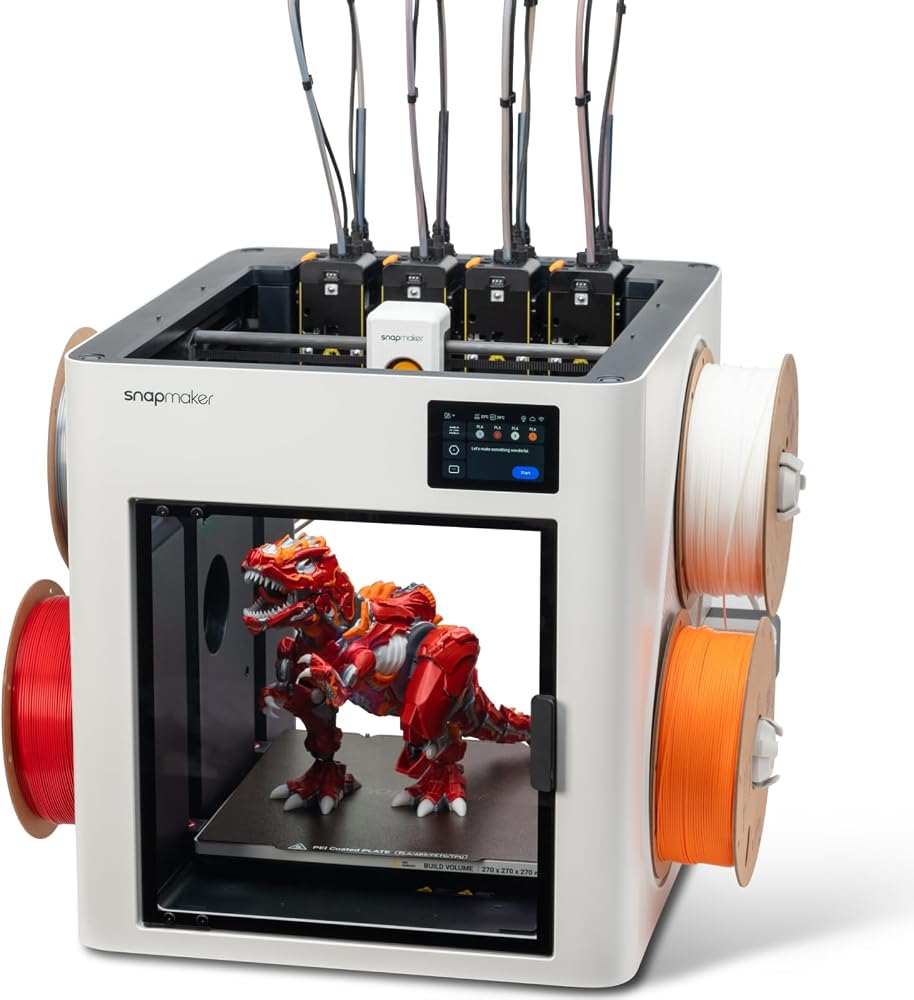
The Snapmaker U1 is its own machine. Snapmaker built its name on modular desktop tools, and the catalog also includes the Snapmaker 2.0 sizes and the J1. A Black Friday title that says only “Snapmaker” is not a U1. Snapmaker U1 Black Friday Deals 2026 should be judged from the current contents list and the current spec sheet for the U1, not from a memory of a different Snapmaker box. This page does not invent a build volume, a nozzle count, or a wattage. Those numbers belong on the manufacturer page for the unit you are buying, and they are the first thing to read.
Match the model before the price
Snapmaker 2.0 machines were sold as A250 and A350 sizes, often as 3-in-1 bundles that could 3D print, laser, and CNC with separate modules. The J1 is an IDEX 3D printer, a different mechanism with two independent heads. The U1 is neither of those just because the brand matches. If your listing does not say U1 in the title and on the unit’s product label, stop. A discount on an A350 bundle is a real discount on an A350 bundle. It is not a U1 offer.
Write down what the U1 listing includes. Toolheads, build plate, enclosure panels, filtration, software license, and spare nozzles are either in the box or they are accessories. A photo of a fully loaded machine is marketing until the bullet list repeats it. Count the lines. A “printer only” SKU and a “bundle” SKU can share a hero image. Pay for the one whose list you want.
Build volume, heated-bed temperature, supported materials, and noise are spec-sheet facts. Copy them from Snapmaker’s current U1 page into your notes, and check that the retailer repeats the same figures. If the retailer is silent, ask before you buy. Do not fill the silence with a number from a 2.0 review. The older machines are not this one.
Software, ventilation, and the room
Desktop fabrication needs a table that can take the weight, a ventilated spot if the process produces fumes, and a host computer or a network the machine actually supports. Confirm the U1’s connection method, whether that is a cable, Wi-Fi, or a screen on the machine, from the current manual. Confirm which slicer or Snapmaker software version the U1 requires. A Black Friday unit that arrives without a note about software is still usable only after that install. Do it inside the return window.
If the configuration you bought includes a laser module or a CNC module, ventilation and eye safety are part of the purchase, not an optional hobby essay. Follow the manual’s enclosure and filter rules. Do not run a laser in an open apartment because a sale made the machine feel casual. If your U1 configuration is a 3D printer only, say so, and do not buy laser safety gear you do not need or skip filtration the spec requires.
Power is a normal household circuit question. Read the input voltage and the plug. A US listing should be a US plug. A 220-volt-only unit is a different product in a US kitchen. The label on the machine wins over the title.
The first hour with the machine
Clear a table that can hold the weight, with space to open the door or reach the toolhead. Unbox against the contents list, not against the photo on the retailer page. Update firmware from Snapmaker’s own instructions before the first job. Slice a small calibration piece in a material the current U1 spec sheet allows, and stay with it. A finished small part tells you homing, extrusion or the cutting path, and the emergency stop all work. A failed part in a material the spec excludes tells you to change the material, not to return the machine. Keep the packaging until that first in-spec job is done. Black Friday shipping weeks are a bad time to discover a missing toolhead after the carton is gone.
Used units and missing modules
A used U1 can be a fair buy when the seller shows the toolheads that match the original bundle and a print or a cut from this month. Worn nozzles, a scarred bed, and a filter that was never changed are ordinary. A machine that will not home is not ordinary. Ask for a video of a homing routine. Modules sold “compatible with Snapmaker” by third parties may fit a 2.0 and not a U1. Do not assume a cheap laser head from a generic listing belongs on this model.
Warranty from Snapmaker often follows the original buyer and the region. A marketplace unit may be out of warranty even when it looks new. Ask. A holiday return window from the marketplace is then your only safety net. Use it. Power the machine on, update firmware from the official source, and run one small job in a material the spec sheet allows. A failed first job with the right material is a return. A failed job in a material the spec excludes is user error. Know which one you are looking at.
Snapmaker U1 Black Friday Deals 2026 checklist
- Require the model name U1, not 2.0 and not J1.
- Copy build volume, included toolheads, and voltage from the current Snapmaker spec, and match the retailer list to it.
- Separate printer-only from bundle SKUs by the written contents, not the photo.
- Plan the table, the ventilation, and the software before the carton arrives.
- On a used unit, ask for a homing video and the warranty status.
- Run one small, in-spec job inside the return window.
- Compare today’s total with Snapmaker’s current price for the same included-tool list. A discount advertised on an A350 is not a U1 offer.
The U1 is worth buying when the contents list and the spec sheet describe the machine you have room for. Black Friday can change the price of that list. It cannot turn a different Snapmaker into a U1, and it cannot invent a build volume the manufacturer did not print.