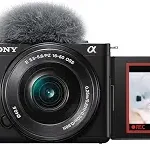
Sony Alpha a6400 Mirrorless Camera (ASIN B07MV3P7M8)
Best Mirrorless Camera Buying Guide — Black Friday Deals 2026
Choosing a mirrorless camera starts with the pictures and videos you expect to make, not with a sale badge. This guide compares three kits through their listed sensors, lenses, video details, screens and shooting rates, so you can narrow the choice to the features that matter in everyday use. The Canon EOS R100 is the budget pick, the Nikon Z 30 is the overall pick, and the Sony a6400 is the framing-focused option. Those are editorial choices among these three products, not claims of market-wide superiority or measured performance. During Black Friday, compare the exact camera and lens variant shown in the offer with the configuration you actually want. A lower displayed price is useful only if the listing is for the intended kit.
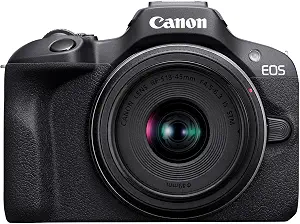
Canon EOS R100 Mirrorless Camera RF-S18-45mm F4.5-6.3 is STM Lens Kit
Canon EOS R100 Mirrorless Camera RF-S18-45mm F4.5-6.3 is STM Lens Kit (ASIN B0C5PGRP7V)
The Canon EOS R100 earns the Best Budget label in this guide because its listed kit brings a 24.1 megapixel CMOS (APS-C) sensor and an RF-S18-45mm F4.5-6.3 IS STM lens together in one camera package. For someone stepping into interchangeable-lens photography, that pairing provides a clear place to begin: consider whether the included lens suits the scenes you usually photograph before spending time comparing other kits. It is also a sensible option for a household camera when still photographs are the main priority and the listed video specification meets your plans. The label is a practical editorial distinction, not a promise about the price of a Black Friday offer.
For video, the R100 records 4K video at up to 24 fps. That precise qualification matters: think about the frame rate and recording choices you need rather than treating the words “4K” alone as a complete description. Its Dual Pixel CMOS AF covers a wide area up to 143 zones, a detail worth considering if you want autofocus coverage across more than a single central point. Continuous shooting reaches up to 6.5 shots per second when set to One-Shot AF. Keep that condition in view when deciding whether the camera’s listed shooting rate matches the way you expect to photograph action; do not read it as a rate for every autofocus setting.
The included lens has Optical Image Stabilization at up to 4 stops of shake correction. That is a lens specification, so shoppers can treat it as one concrete part of the kit rather than assuming every lens they might later use has the same detail. The camera’s screen size is 3 inches, another simple point to check against your preferences when composing and reviewing images. As you compare Black Friday listings, verify that the product title and kit description identify the RF-S18-45mm F4.5-6.3 IS STM Lens Kit. Offers can refer to different configurations, and the camera body alone is not the same bundle. If this kit’s stated sensor, autofocus, video and lens details address your priorities, it merits a place on a budget-conscious shortlist; use the exact offer and variant, rather than the badge, to make the final decision.
Key specs
Sensor
24.1 megapixel CMOS (APS-C) sensor
Video
4K video at up to 24 fps
Autofocus
Dual Pixel CMOS AF covers a wide area up to 143 zones
Continuous shooting
up to 6.5 shots per second when set to One-Shot AF
Included lens
Canon RF-S18-45mm F4.5-6.3 IS STM Lens Kit
Lens image stabilization
Optical Image Stabilization at up to 4 stops of shake correction
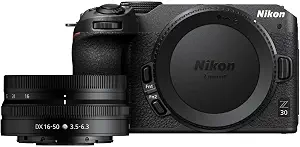
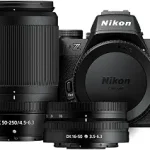
Nikon Z 30 with Wide-Angle Zoom Lens (ASIN B0B527QM4X)
The Nikon Z 30 is the Best Overall choice here for shoppers who want a blend of still-photo, video and self-framing details in the listed package. It includes a Nikkor Z DX 16-50mm f/3.5-6.3 VR Lens, and its CMOS sensor has an effective still resolution of 20.9 mp. Those details give you useful questions to ask before checkout: is the included lens the one you intend to start with, and is the stated still resolution appropriate for the photographs you expect to make? The overall label is an editorial choice within this guide. It does not mean the Nikon is automatically the right camera for every buyer or that it has been proven superior in a test.
The Z 30 records 4K resolution video and has a flip out touchscreen selfie monitor. That screen description may be especially relevant if you plan to appear in your own recordings or want to see the framing while positioned in front of the camera. The provided specification identifies the display as a touchscreen that flips out; use those stated traits as your comparison points rather than assuming unlisted screen functions. The camera’s continuous shooting specification is 11 frames_per_second. If bursts are part of your intended use, compare that exact listing with the conditions and capabilities you need, and avoid treating a single rate as a guarantee for every shooting situation.
Connectivity is listed as Bluetooth, HDMI, USB, Wi-Fi. This offers a concrete checklist for deciding whether the camera’s stated connections align with your workflow. For example, consider which connection types matter when you plan to move files or connect equipment, then verify the exact needs of your setup separately instead of assuming a particular accessory or transfer behavior. During Black Friday, compare the Z 30’s full name and the included Wide-Angle Zoom Lens configuration with the offer details. A camera listing may describe a body or a kit, so check that the lens named in the product record is included in the specific variant you are considering. Choose the Nikon if its combination of a flip-out touchscreen, 4K resolution, listed connectivity and supplied lens answers more of your practical questions than the alternatives. The Best Overall label is a helpful starting point for this comparison, not a substitute for checking your priorities.
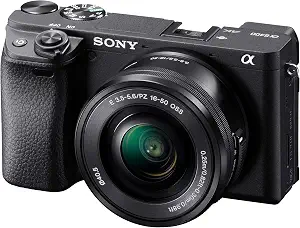
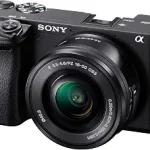
Sony Alpha a6400 Mirrorless Camera (ASIN B07MV3P7M8)
The Sony Alpha a6400 is the Best for Flip-Screen Framing pick because its listed screen is a flip screen. That gives the product a distinct role in this guide for shoppers who place visible framing high on their checklist, including people planning to compose themselves in a shot. The label describes the reason for its place here; it does not suggest that the screen has unlisted functions or that the camera is the best choice for every kind of photography. The listed camera has an APS-C sensor, comes with a 16-50mm lens and uses a Sony E (NEX) mount. Check the exact kit description when deciding whether this particular lens package matches your intended purchase.
The a6400 records 4K (2160p) video, and its continuous shooting specification is 11 frames_per_second. Those facts can help you decide whether it belongs on a shortlist for a mix of stills and video. Consider your own subjects and recording plans before placing weight on either figure: the provided details do not specify every operating condition, so avoid assuming that the rate or video description answers questions not stated here. For a shopper choosing between the Nikon and Sony, the listed shooting rates match, while their screen details differ: the Nikon is described as a flip out touchscreen selfie monitor, and the Sony as a flip screen. Use that distinction to identify which screen description better fits your priorities, rather than presuming the two displays are otherwise identical.
Black Friday comparisons should keep the Sony’s lens and mount in view alongside its screen and video details. Confirm that the offer identifies the Alpha a6400 and the 16-50mm Lens variant, and read the listing’s configuration carefully before deciding that two offers are comparable. Think through what you want to frame—yourself, another person, or a scene—and whether the flip screen is a decisive convenience for your intended use. The camera’s APS-C sensor and Sony E (NEX) mount are also useful identifiers when evaluating the product listing. If framing is the feature that most influences your purchase, the a6400 provides a clear, source-supported reason to stand apart in this selection. If other specifications matter more, compare those directly with the Canon and Nikon rather than letting a single label make the decision.
Key specs
Sensor size
APS-C
Lens
16-50mm Lens
Mount
Sony E (NEX)
Video
4K (2160p)
Screen
Flip Screen
Continuous shooting
11 frames_per_second
Map the camera to your everyday subjects
Before browsing Black Friday listings, write down a few situations you genuinely expect to photograph or record. Family gatherings, travel scenes, portraits, self-framed video and occasional action each lead to different questions. That list can keep the choice grounded in use rather than in a long specification sheet. The Canon’s 24.1 megapixel CMOS (APS-C) sensor, the Nikon’s 20.9 mp effective still resolution and the Sony’s APS-C sensor are useful distinctions, but the provided details do not make those figures a complete measure of picture quality. Treat them as points for comparison, then decide whether other listed features are more relevant to your plans.
For video, begin with the exact wording. The Canon specifies 4K video at up to 24 fps; the Nikon lists 4K resolution; the Sony lists 4K (2160p). These descriptions are not interchangeable promises about every recording mode. If frame rate is important to you, the Canon’s stated qualification gives you a specific detail to consider, while the other listings leave that particular detail unstated here. Do not fill gaps with assumptions. During Black Friday, jot down the feature you need beside the exact product variant, and use that shortlist to compare offers without letting a broad “4K” headline settle the question by itself.
Decide what the bundled lens needs to do
Each featured listing includes a lens, which makes the kit description part of the buying decision rather than a detail to skip. The Canon package names the RF-S18-45mm F4.5-6.3 IS STM Lens Kit; the Nikon includes a Nikkor Z DX 16-50mm f/3.5-6.3 VR Lens; and the Sony listing names a 16-50mm Lens. Keep those descriptions beside the camera model when comparing offers. Do not assume that lens specifications or mount information from one product apply to another, and do not treat two listings as equivalent just because both include a lens.
Make a practical list of the kinds of scenes you want to cover, then check whether the exact kit under consideration is the package you intended to buy. If you already have a preferred lens plan, confirm the listed lens and mount details before moving on to price. The Sony record identifies a Sony E (NEX) mount, while the included Canon and Nikon lenses are named in their respective kit descriptions. These details help distinguish variants; they do not establish unprovided compatibility claims. Black Friday can bring several camera listings into the same search, so compare full product names and bundle descriptions, not just a thumbnail or shortened title. That small check helps prevent an attractive offer from distracting you from the camera-and-lens combination you actually want.
Choose a screen that fits your framing habits
How you compose can shape which camera feels like a better match on paper. The Nikon has a flip out touchscreen selfie monitor, while the Sony is listed with a flip screen. The Canon’s provided display fact is a screen size of 3 inches. These are different descriptions, so focus on the particular screen trait that matters to you: perhaps you want a screen that flips out, or perhaps you mainly want to know the stated size. The records do not provide a comparable screen description for every model, so avoid treating an unmentioned feature as proof that a camera lacks it.
Picture a real moment when you would look at the display: setting up a self-framed clip, reviewing a still, or composing while the camera is positioned for a scene. Which stated screen detail would make that moment more convenient? If self-framing is central, the Nikon and Sony have explicit flip-screen descriptions to compare, with the Nikon specifically identified as a touchscreen selfie monitor. The Sony is the guide’s Best for Flip-Screen Framing pick, based on its listed flip screen. During Black Friday, check that you are comparing the intended model and package; a deal headline cannot tell you whether the stated display details suit your working style.
Read shooting rates with their conditions
A continuous-shooting number can look like an easy way to choose, but its stated conditions matter. The Canon reaches up to 6.5 shots per second when set to One-Shot AF. The Nikon and Sony each list 11 frames_per_second. The Canon’s qualification is part of the specification, not a footnote to discard. Likewise, the figures alone do not establish how a camera behaves in every situation or tell you which one will make a particular photograph. If you rarely use bursts, another feature—such as the supplied lens or the screen description—may be more useful in your decision.
For shoppers who do expect to photograph moving subjects, think about what you are trying to capture and how you normally work. Then compare the listed shooting information as written, without extending it into claims about autofocus behavior or guaranteed results. The Canon also lists Dual Pixel CMOS AF covering a wide area up to 143 zones, a separate fact you may weigh alongside its qualified shooting rate. Black Friday is a good time to organize those details before evaluating an offer: note the model, the relevant shooting specification and any conditions attached to it. If a listing omits information you need, seek clarity from the product details rather than treating a neighboring model’s specification as a substitute.
Verify the offer before making your shortlist final
A Black Friday price comparison is meaningful only when the listings refer to the products you intend to compare. Check the complete model name, the included lens and any configuration wording. The Canon is listed as an RF-S18-45mm F4.5-6.3 IS STM Lens Kit, the Nikon with a Nikkor Z DX 16-50mm f/3.5-6.3 VR Lens, and the Sony with a 16-50mm Lens. Those descriptions are easy to overlook when browsing quickly, yet they are central to deciding whether an offer matches your shortlist. No price or discount is provided here, so base your own comparison on the exact live offer you encounter.
Before checkout, revisit your priorities in order: still-photo needs, video requirements, framing preferences, shooting-rate conditions and the lens included. Confirm the product variant shown in the offer instead of assuming that a search result, title fragment or photograph establishes the package. Avoid making a decision from a deal label alone, and do not assume an offer is active just because the season is associated with promotions. This final pass is especially useful if several listings use similar camera names. Compare the actual product details you can see, decide which tradeoffs you accept, and choose the kit that answers your own questions most clearly.
Make your Black Friday choice
The right mirrorless camera is the one whose stated features match the way you plan to use it. The Canon is the budget-oriented choice in this guide, the Nikon earns the overall editorial label for its mix of listed details, and the Sony is singled out for its flip-screen framing. None of those labels replaces your own priorities. During Black Friday, verify the exact model, lens configuration and offer before comparing prices, then return to the specifications that matter most to you. A deliberate shortlist makes it easier to choose a useful camera kit without relying on an unsupported promise or a sale headline.