BookFactory Cornell Notes Notebook
Mr. Pen- Transparent Sticky Notes Set, 1000 Sheets
Index Cards 3×5, 200 Count, Flash Cards with Ring
Best Study Tool Buying Guide — Black Friday Deals 2026
A useful study tool should fit the way you capture, sort, and revisit information—not just look appealing in a Black Friday roundup. These options support different routines: a Cornell-layout notebook gives notes a set place on the page, transparent sticky notes let you add movable annotations, and ring-bound index cards keep prompts together in a compact format. The best fit depends on whether you usually work through a topic in longer written notes, mark material in place, or review individual ideas. Black Friday can be a good time to compare the listings, but an offer only matters if the format and included contents suit your actual study habits.
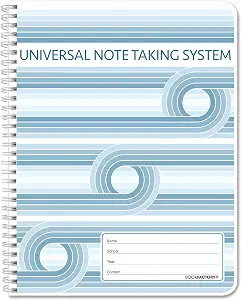
BookFactory Cornell Notes Notebook
Best Overall: The BookFactory Cornell Notes Notebook is the most structured choice here, with each page divided into cues and questions, notes, and summary sections. That layout can suit a student who wants to capture an explanation and leave a separate space for prompts or a concise recap. A header area for the date, subject, and book or source gives each page places for context, which may be useful when notes cover multiple classes or readings. The structure is the central reason for this editorial Best Overall label among these three options; it is not a claim of measured superiority.
At 120 Pages and 8.5″ x 11″, this is a full-size notebook rather than a small stack of loose review prompts. Its spiral binding and polypropylene (PP) cover are listed details to consider when deciding how the notebook will fit into your study routine. The page size offers a single place to develop notes alongside cues and a summary, while also calling for more room than a pocket-size card format. If you prefer to decide the organization of every page yourself, the built-in sections may feel more prescriptive than a blank page. If you welcome a repeated framework, they can help you keep the same kind of information in consistent areas.
For a Black Friday purchase, consider whether you will actually use all three page sections, rather than choosing the notebook simply because it looks like a conventional study essential. Picture a specific task: recording a lecture, organizing a reading, or writing questions to revisit. The notebook is a natural match when those activities benefit from a sustained written record. It is less directly suited to someone whose main aim is to place brief annotations on existing material or carry individual prompts separately. Compare the exact listing and format with your routine; the Best Overall label describes this guide’s fit-based recommendation, not a sale claim.
Key specs
| Pages | 120 Pages |
| Paper size | 8.5″ x 11″ |
| Binding | Spiral-bound |
| Cover material | Polypropylene(PP) |
| Page layout | each page is split into the three main sections – cues & questions, notes, and summary. |
| Header space | There is a space at the top to write the date and subject as well as the book or source that is being discussed. |
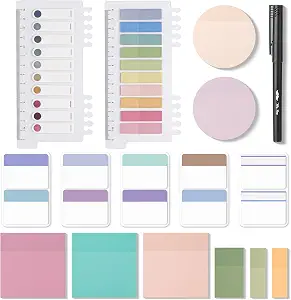
Mr. Pen- Transparent Sticky Notes Set, 1000 Sheets
Check Price on Amazon
Best Budget: Mr. Pen- Transparent Sticky Notes Set, 1000 Sheets is the quantity-focused option in this guide. The set is listed as having a total of 1000 sheets in different sizes and colors, with rectangular notes and adhesive backing. Its transparent format makes it a different kind of study aid from writing a topic out in a notebook: it can be considered for brief annotations placed on paper or on the listed surfaces of walls and desks. The Best Budget label is an editorial choice based on the set’s sheet count and intended role here; it does not assert a particular price, discount, or lowest offer.
This format may suit a routine built around short reminders, labels, or comments that need to stay near the material they refer to. Having different sizes and colors provides options for choosing a note style, though the supplied details do not identify particular dimensions or color names. The adhesive backing and stated surfaces are useful details to compare with your planned use. For a task that calls for connected explanations, long summaries, or a permanent-feeling written sequence, a notebook may be a more natural starting point. Sticky notes instead make sense when you want to add small pieces of information in more than one place.
During Black Friday, judge this set by your likely rate of use rather than treating a large sheet count as an automatic bargain. Think about whether you regularly make annotations, where you would place them, and whether several sizes and colors would be useful to you. The listing gives a total count, but it does not specify how that total is divided among the sizes and colors, so check the exact item details before deciding whether the assortment fits your preferences. This set’s role is distinct from the other picks: it is for placing brief notes on listed surfaces, not for keeping a page-by-page notebook record or organizing cards on rings.
Key specs
| Sheet count | a total of 1000 sheets |
| Sizes and colors | different sizes and colors |
| Adhesive | adhesive backing |
| Surfaces | paper, walls, and desks |
| Shape | Rectangular |
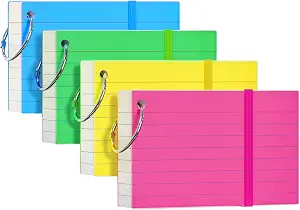
Index Cards 3×5, 200 Count, Flash Cards with Ring
Check Price on Amazon
Best for Ring-Bound Review: Index Cards 3×5, 200 Count, Flash Cards with Ring is the clearest match for someone who wants to collect study prompts in a card format. The listing specifies 200 3 x 5 inch index cards and 4 sturdy, reusable binding rings. That combination provides a way to keep cards together while still working with individual prompts or pieces of information. The Best for Ring-Bound Review label reflects those stated components and this guide’s intended use for them; it is not a claim that the cards perform better than other products.
The compact card size can appeal to someone who prefers a question, definition, or other short study point on a separate card rather than embedded in a longer page of notes. The white interior provides the stated writing surface, and the product also lists 50 matching white inner pages. Those inner pages are a separate included detail, so do not assume they change the stated card count. Four cover colors are listed as well. If you want to write out connected explanations or keep source and date information alongside a longer set of notes, the Cornell notebook’s page layout offers a different kind of structure. Cards prioritize separable prompts.
For Black Friday, check that you are comparing this precise card-and-ring item, including its listed count and components, rather than another index-card format with a similar title. Consider how you plan to sort and revisit the cards: the rings can keep a group together, while the cards themselves support individual entries. That can be a useful fit for review organized around discrete ideas. It may be less appealing if your usual study work needs a continuous account of a reading or a place to attach short annotations directly to material. Choose it for the ring-bound approach, not because the label promises a particular learning result.
Key specs
| Card count | 200 3×5-inch index cards |
| Binding rings | 4 sturdy, reusable binding rings |
| Card size | 3 x 5 inch pocket size |
| Inner pages | 50 matching white inner pages |
| Cover colors | 4 vibrant, eye-catching covers |
| Writing surface | pure white interior |
Decide what a study session asks you to do
Start with the work you expect the tool to support. If a session involves following a lecture or working through a reading, ask whether you want a running written record with prompts and a summary area. The BookFactory notebook’s three-part page layout is designed around those different kinds of notes. If you mostly need brief markers placed beside material, transparent sticky notes are a more direct format to consider. If you tend to revisit one short idea at a time, cards held on rings give each entry its own space.
These uses can overlap, but buying for the task you do most often helps avoid an awkward format choice. A notebook asks you to work within a repeated page structure; a sticky note is a small annotation rather than a full record; a card separates one entry from another. Think through an ordinary study session, not an idealized new routine you may never adopt. Black Friday can make several study supplies tempting at once, but the right purchase is the one you can connect to a real recurring activity. If you cannot name that activity, pause before adding another format.
Choose how much organization you want supplied
Some learners want structure decided in advance, while others would rather create their own. The notebook supplies labeled areas for cues and questions, notes, and a summary, plus a header space for the date, subject, and source. That can make it easier to keep those kinds of information distinct, provided you want to use the layout. Index cards supply a different kind of organization: their separate format and the included rings support keeping cards together. Sticky notes offer adhesive backing for placing a short annotation on one of the listed surfaces.
Consider whether a tool should guide your writing or simply hold it. A fixed page pattern may suit someone who appreciates a repeatable approach, but a card or sticky note lets the user decide how to arrange each entry or placement. Neither preference is universally better. For Black Friday, use the product details to match your tolerance for built-in structure with the way you already organize information. If you are undecided, imagine using the item for a specific chapter or class topic and ask whether its organization would help you keep track of that work.
Account for where notes will be read again
The place where you expect to revisit information can shape the choice as much as the act of writing it. Notebook pages keep cues, notes, and summaries within the same page framework, which may be useful when you want to look back at a topic in context. Cards separate entries, making the ring-bound set a consideration for people who prefer to handle prompts individually. Sticky notes are intended for placement on paper, walls, and desks, so they may suit reminders that should stay near a particular surface.
Map the return trip from writing to review: will you open a page, handle a card, or look at an annotation where it was placed? The answer can reveal whether a format fits your surroundings and habits. Avoid assuming that one product will organize every type of study material equally well. During Black Friday shopping, compare each item against the place and moment you expect to use it, not just against another product’s quantity. A tool that suits a regular review habit is more relevant than one whose format you would need to work around.
Use the stated contents to judge the offer
A Black Friday offer should be assessed against the exact item and its stated contents, not a headline alone. The notebook lists 120 Pages, a specific page size, spiral binding, a PP cover, and its Cornell-style sections. The sticky-note set lists 1000 sheets, different sizes and colors, adhesive backing, and its rectangular shape. The card set lists 200 cards, 4 reusable binding rings, 50 matching white inner pages, and 4 cover colors. These are different types of quantities and components, so they should not be treated as directly interchangeable measures of value.
Before deciding, check that the listing you are viewing matches the product and details you intend to buy. For the sticky-note assortment, the provided details do not say how the total sheets are split among sizes and colors; decide whether you need that information from the exact listing. For the card set, keep the card count distinct from the inner-page count. Black Friday pricing may change, but no particular discount is guaranteed here. Compare the offer you see with your own requirements and budget, and skip it if the contents do not answer the reason you were shopping.
Make room for the format you will actually reach for
Physical format affects how a study tool fits into a routine. The notebook’s 8.5″ x 11″ pages offer a larger writing area than the listed 3 x 5 inch cards, but they also make the notebook a different-size item to accommodate. Cards can be considered when you want separate entries held on rings. Sticky notes are rectangular and have adhesive backing, and their stated surfaces include paper, walls, and desks. Think about where each item would be kept and whether that location suits the way you study.
This is not a call to buy every format and find a use later. If your work rarely involves brief annotations, a large sticky-note set may not suit your routine simply because it contains many sheets. If you do not review separate prompts, ring-bound cards may not be the right addition. Likewise, the notebook’s structured pages matter most when you plan to use their sections. Black Friday can encourage quick choices, so imagine reaching for the item during a normal week. A clear place in that routine is a better reason to buy than an appealing product label.
Make your Black Friday choice
The three picks serve different study actions: structured page notes, movable annotations, and ring-bound individual cards. Choose the BookFactory notebook if its sections match the way you record and revisit a topic; consider Mr. Pen’s set if you want transparent adhesive notes for the stated surfaces; and look to the card set if separate entries and rings fit your review routine. Black Friday is a moment to compare the exact listing and offer, not a reason to overlook format or contents. Buy the tool that supports a real habit, and leave the rest for another time.